Can you go whale watching all year?
Yes. Madeira’s official tourism board describes whale watching as a year-round activity. The Madeira Whale Museum records 28 cetacean species in the archipelago’s waters, including both frequent and occasional visitors.
That broad diversity is not a promise that every species—or even any cetacean—will appear on a particular trip. Weather, animal movement and the operator’s search all shape the day.
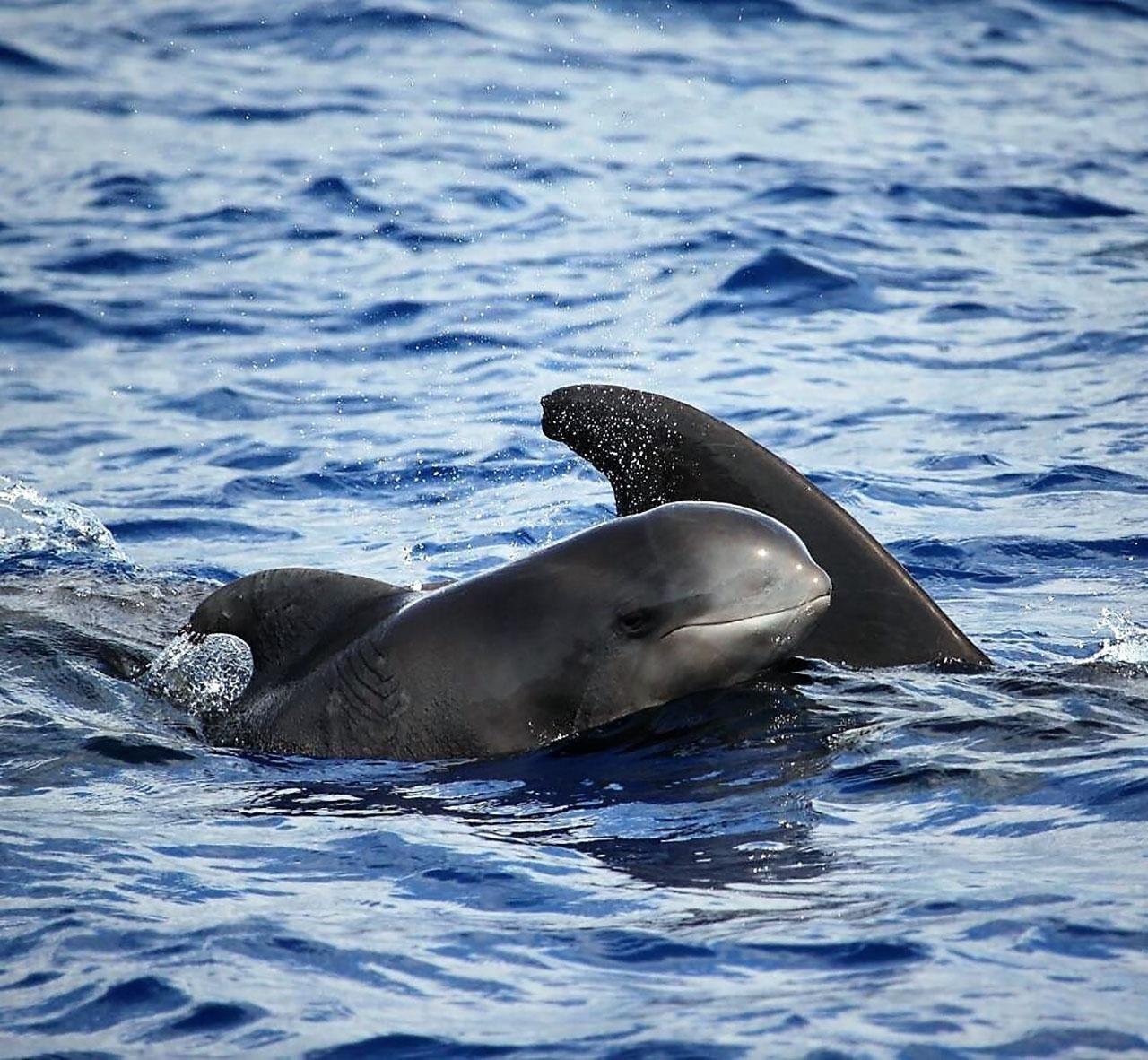
- Bottlenose dolphins and short-finned pilot whales have an annual presence.
- Common dolphins are especially associated with winter and spring.
- Atlantic spotted dolphins and Bryde’s whales are more associated with summer and autumn.
Winter and spring: common-dolphin season
The Whale Museum identifies the common dolphin as a seasonal species seen especially in winter and spring. These months can therefore be interesting for travellers who care about that particular species rather than simply “seeing a whale.”
Winter also asks for flexible planning. Sea conditions can change and operators may cancel when it is unsafe. A windproof or waterproof layer is a sensible addition even if the day begins mild on land.
Summer and autumn: spotted dolphins and Bryde’s whales
The Museum’s published material associates Atlantic spotted dolphins and Bryde’s whales more strongly with summer and autumn. Its species page describes spotted dolphins as common in spring and summer, with lower-frequency observations possible at other times.
More of the warmer-season tours include swimming stops, but the stop still depends on the experience, departure time and conditions. Do not confuse a scheduled swim with a wildlife guarantee.
Morning or afternoon?
There is no reliable universal “best time of day” for sightings. Operators schedule several departures, and wildlife movement remains unpredictable.
Choose the time that suits your energy, travel plans and tolerance for changing sea conditions. Then check in on time: several tours require arrival 30 minutes before departure.
Weather matters differently at sea
A calm-looking promenade does not tell you exactly how an offshore trip will feel. Faster RIBs expose you to more wind and motion. Catamarans offer more space to move and find shelter.
Unsafe conditions can lead to rescheduling or cancellation. This is a safety decision, not a failure of the tour. Keep some flexibility in your itinerary when whale watching is a priority.
A simple season-proof booking strategy
Book early enough to secure the boat style you want, but keep the day flexible. Choose a tour whose cancellation and no-sighting terms you understand. If you are prone to seasickness or have mobility considerations, let the vessel type guide you more than the season headline.
- Pick your harbour: Funchal for breadth, Calheta for a focused southwest choice.
- Pick your vessel: catamaran for space, RIB for pace and a lower viewpoint.
- Understand the no-sighting terms: repeat trip, reduced-price return or no guarantee.
- Pack a wind layer in every season.