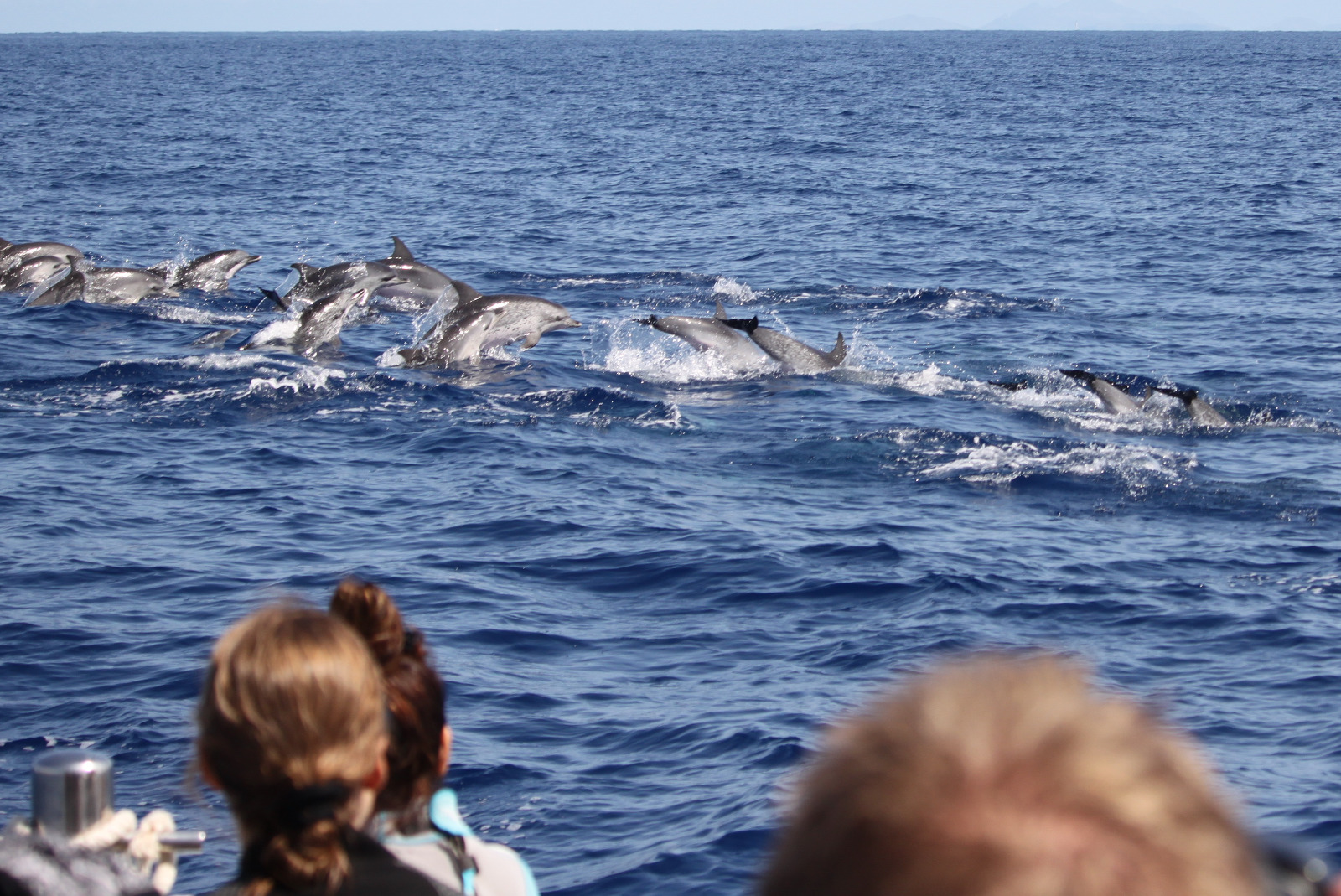
The species most often in the picture
The official tourism board lists common, Atlantic spotted and bottlenose dolphins among frequent sightings, alongside sperm whales, short-finned pilot whales and Bryde’s whales. Loggerhead turtles may also appear, although they are not cetaceans.
The Whale Museum’s research material says five species account for 86% of observations by whale-watching vessels: bottlenose dolphin, short-finned pilot whale, common dolphin, Atlantic spotted dolphin and Bryde’s whale.
- Bottlenose dolphin: annual presence around Madeira.
- Short-finned pilot whale: annual presence, with groups associated with the islands.
- Common dolphin: especially winter and spring.
- Atlantic spotted dolphin: more associated with warmer months.
- Bryde’s whale: seasonal, more associated with summer and autumn.
Why “whale watching” often means dolphins too
Cetaceans include whales, dolphins and porpoises. Madeira tours search for the wider group, so a day advertised as whale watching may result in a dolphin encounter—or the reverse.
That is not a lesser outcome. Different species use Madeira’s waters for feeding, resting, socialising and reproduction. The value of the trip lies in observing natural behaviour without demanding a particular cast.
What a sighting rate cannot promise
A high sighting rate describes past trips, not the departure in front of you. The result can change with the boat, month, harbour, weather and movement of the animals.
Read the fallback terms precisely. A free second ticket, a discounted return and a refund are three different things. A second trip may also depend on availability during your stay.
What responsible watching looks like
Madeira regulates observation of marine vertebrates. The regional conservation authority says the rules are designed to reduce disturbance, protect animal welfare and support a sustainable, high-quality activity.
Good practice includes a discreet approach, reduced speed near animals and avoiding actions that cause evasion or stress. The most exciting crew is not the one that chases closest. It is the one that knows when to slow down or leave.
Spotters, marine biologists and the search
Some Madeira tours include a marine biologist or naturalist guide. Others use land-based spotters who scan a wider area and pass directions to the crew.
These roles can improve interpretation and search efficiency, but they still cannot control wildlife. Look for clear education, safety and respect rather than certainty language.
How to prepare for the moment
Keep your camera ready but do not spend the whole trip looking through it. Listen for crew directions, hold rails when the boat changes speed and let people at the best viewing angle make room for others.
- Use sun protection and bring a wind layer.
- Choose a boat that suits your back, balance and mobility.
- Expect spray on a RIB and more movement around a catamaran deck.
- Treat every species as wild and every sighting as temporary.